
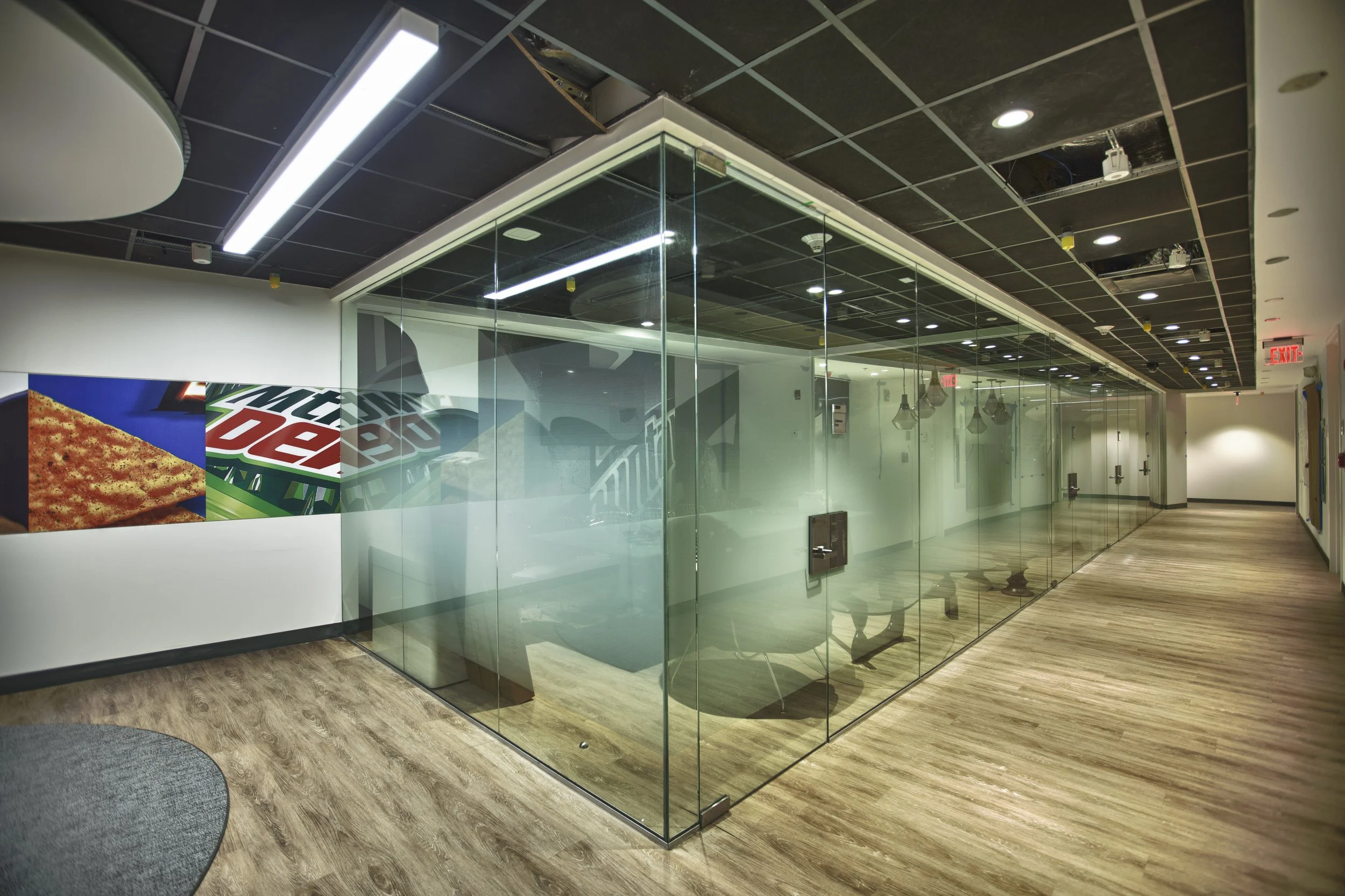
Glass walls, partitions, and façades promote openness, encourage collaboration, and allow natural light to flow freely throughout a workspace. However, as visually striking as glass can be, it often creates a new challenge for you: how to maintain privacy, focus, and confidentiality without compromising the clean, contemporary aesthetic your space was designed to achieve.
Rethinking Privacy in Modern Workspaces
As offices move away from enclosed layouts, privacy needs have become more nuanced. You’re no longer designing for isolation but for controlled visibility. Conference rooms need discretion without feeling boxed in. Executive offices require confidentiality without visual hierarchy. Collaborative zones need separation without interruption.
How Architectural Glass Films Improve Your Design and Function
Glass films address these layered requirements by allowing you to fine-tune visibility rather than eliminate it completely. Instead of building barriers, you shape perception, preserving openness while protecting sensitive activity. These advantages make glass films a functional design element rather than a purely corrective solution.
Using Gradient Films
These gradient films are especially effective when you need privacy without visual confinement. By transitioning from opaque to clear, they allow you to block direct views at seated or standing eye level while leaving upper areas transparent.
This approach is particularly effective in conference rooms, private offices, and interior partitions where you want discretion without disconnecting the space from its surroundings. When aligned correctly with furniture height and human sightlines, these feel intentional and architecturally integrated rather than applied as an afterthought.
Improving Visual Comfort
Uncontrolled light can be just as disruptive as a lack of privacy. Harsh glare from exterior windows or interior lighting can reduce screen visibility, increase eye strain, and negatively affect productivity.
High-quality glass films diffuse incoming light evenly across the space. Instead of sharp contrasts and reflections, you get softer illumination that supports visual comfort. This reduces reliance on artificial lighting while creating a more balanced, comfortable work environment throughout the day.
Elevating Aesthetics
Not all privacy solutions need to look neutral. Decorative and chroma films introduce subtle visual complexity that enhances the architectural character of your space. These films allow glass to become a design feature, not just a functional divider, that provides you:
Dynamic finishes that shift based on light and viewing angle
Layered visual depth that adds interest to otherwise flat glass surfaces
High-end detailing that complements modern interiors
Design versatility for both minimal and expressive environments
Orientation Matters
Street-facing windows often require protection from outside views while preserving daylight and sky visibility. In these cases, bottom-up gradients are ideal. For skylights or areas with overhead lighting, top-down applications help manage glare without darkening the space.
Ignoring orientation can result in privacy that works at one time of day and fails at another. Designing with light movement in mind ensures your solution remains effective under changing conditions.
Privacy Design Mistakes to Avoid In Your Workspace
Effective privacy design requires foresight, understanding how light, movement, and space interact over time. Overusing full-opacity frosted films can block natural light and make offices feel closed off rather than open and modern.
Privacy performance also shifts throughout the day, so films must account for changing sunlight and interior lighting. Applying one solution everywhere ignores how different spaces function, while treating privacy as an afterthought often leads to visual inconsistency.
A Strategic Approach to Glass Film Integration
Effective glass film integration begins with understanding how your office functions. Each zone has unique privacy, lighting, and aesthetic requirements. By analyzing sightlines, furniture layouts, and daily use patterns, you can determine the ideal height, density, and orientation of the film.
Customization is where performance meets identity. Subtle branding elements, custom patterns, or color accents can be incorporated to reinforce your company’s visual language. The result is a solution that feels intentional, architectural, and aligned with your overall design vision.
Want to explore how custom gradient or decorative films can transform your space? We, at APG Design Studio deliver tailored glass film solutions designed for modern commercial environments like yours. Schedule a consultation with our design specialists today!